
Crochet Techniques & Tips Review: Is It Worth It for Crocheters?
Looking for a reliable reference to level up your crochet game? In this deep dive, we evaluate the “Crochet Techniques & Tips” guide to see if its visual instructions and spiral-bound design truly make it a must-have for your craft room.
Introduction
We have all been there: you are halfway through a beautiful new project, the pattern calls for a specific edging technique or a unique stitch you haven’t used in months, and suddenly, the written instructions feel like they are written in another language. Whether it is struggling to visualize how a hook should be positioned for a specific tension or feeling frustrated when your joins look messy and uneven, the “gap” between reading a pattern and executing the physical movement is where many crafters lose their momentum.
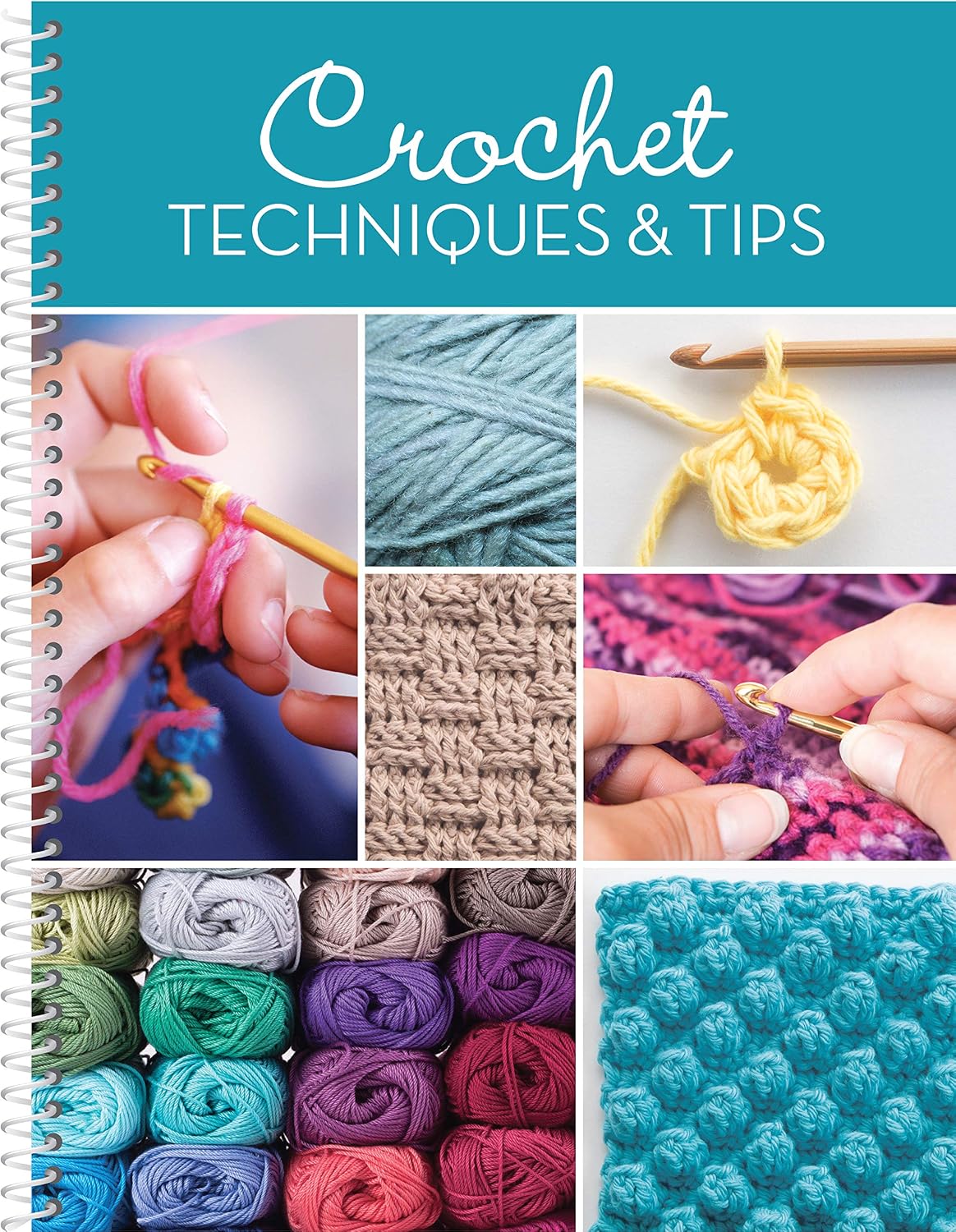
The Crochet Techniques & Tips: For Beginner & Experienced Crocheters with Step-by-Step Instructions & Photos aims to bridge that exact gap. Rather than relying solely on dense, text-heavy descriptions, this book positions itself as a visual companion. It promises to guide you through over 20 different stitches, specialized edging, and crucial joining methods using a heavy emphasis on photographic evidence. As someone who has spent countless hours squinting at small diagrams in pattern booklets, the promise of clear, hands-on imagery is immediately appealing.
Key Features
When evaluating a craft reference book, I look past the title and look at how it is built to function in a real-world crafting environment. This isn’t a book meant to sit on a shelf; it is a book meant to sit on a lap, often covered in yarn scraps.
Visual-First Instruction Style
The most striking feature of this guide is its commitment to photography. The cover itself showcases what the internal experience likely entails: close-up, high-resolution shots of hands working the hook, the way the yarn wraps around the tool, and the resulting texture of the stitch. For many, especially beginners, seeing the “anatomy” of a stitch—how the loop sits on the hook and how the tension is held—is infinitely more helpful than reading “insert hook into second loop from hook.” The inclusion of diverse stitch textures, from chunky bobbles to intricate mesh-like patterns, suggests a wide-ranging visual library.
The Spiral-Bound Advantage
One of the most practical design choices visible is the spiral binding. If you have ever tried to crochet while a standard paperback book is propped up against a water bottle, you know the struggle. Standard books want to snap shut, forcing you to use one hand to hold the page open while the other hand manages the hook and yarn. A spiral-bound format allows the book to lay completely flat on a table or stay folded back on itself, keeping your hands free to focus entirely on your tension and stitch count.
Comprehensive Skill Coverage
The product name highlights a specific focus on three pillars: stitches, edging, and joining. While many books focus exclusively on basic stitches, the inclusion of “joining” is a game-changer. Mastering how to join two colors or transition between different textures is often what separates a “hobbyist” look from a “professional” finish. By offering over 20 stitches alongside these structural techniques, the book covers both the creative (the look) and the technical (the construction) aspects of crochet.
Design & Real-World Quality
From a functional perspective, the quality of a craft book is measured by its utility during a “flow state.” When you are deep in a project, you don’t want to be fighting your tools. The layout of this guide appears designed for quick scanning. The use of large, clear images allows a crafter to glance down, confirm their stitch placement, and return to their work without having to re-read entire paragraphs of text.
The durability of the spiral binding also suggests it can handle the rigors of a busy craft room. It is likely to withstand being tossed into a project bag or moved from the sofa to the kitchen table. Furthermore, the focus on “Step-by-Step” instructions implies a logical progression. A well-designed technical book should move from the foundational movements to more complex manipulations, which is essential for building the muscle memory required for advanced crochet.
What Crafters Are Saying
In analyzing the broader community sentiment regarding visual crochet guides of this nature, a clear consensus emerges. Experienced crocheters often seek these out not because they don’t know how to crochet, but because they want to “troubleshoot” specific textures or learn more efficient ways to join yarn without creating unsightly bumps.
The general feedback for photo-heavy, spiral-bound guides tends to lean heavily toward the ease of use. Many crafters express relief when they find a resource that actually shows the “grip” and “hand position,” noting that it prevents the frustration of “guessing” what a written instruction means. There is also a recurring appreciation for the “lay-flat” feature, which is frequently cited as a major improvement over traditional instructional books. While some advanced users might look for more theoretical depth regarding fiber science or complex mathematics, the consensus for this type of guide is that it serves as an excellent, practical “kitchen table” reference that solves immediate, hands-on problems.
Pros & Cons
Pros
- Hands-Free Utility: The spiral binding allows the book to lay flat, which is essential for active crocheting.
- Visual Clarity: High-quality, step-by-step photography reduces the guesswork involved in complex stitches.
- Versatile Content: Covers a wide range of skills, including difficult-to-master joining and edging techniques.
- Skill Progression: Suitable for both the absolute beginner and the intermediate crafter looking to expand their repertoire.
- Perfect Giftability: The organized, visual nature makes it an easy, high-value gift for any crafter.
Cons
- Breadth vs. Depth: With over 20 stitches, it may not provide the exhaustive, deep-dive theory that a master-level specialist might require.
- Physical Footprint: Being a spiral-bound reference, it may take up more room in a project bag than a slim paperback.
Who It’s For
This book is a perfect match for several types of makers:
- The Visual Learner: If you find yourself reading a pattern three times and still not “seeing” the stitch, the photographic approach here will be a lifesaver.
- The Beginner: Those just starting out will benefit from seeing the correct hand positions and hook angles, which helps build good habits early on.
- The “Stitch Hunter”: Intermediate crocheters who want to add more texture (like bobbles, ribs, or lace) to their repertoire without searching through dozens of different websites.
- The Gift-Giver: Because it covers a broad spectrum of skills, it is a “safe” and highly useful gift for almost any level of crafter.
Who should pass? If you are an advanced fiber artist looking for deep dives into mathematical pattern construction or advanced colorwork theory, you might find this more to be a practical “how-to” guide rather than a theoretical textbook.
Final Verdict & Tips
The Crochet Techniques & Tips guide is a highly practical, user-centric resource that understands the actual physical realities of crocheting. By prioritizing visual instruction and a lay-flat binding, it moves away from being a “reading book” and becomes a “working tool.” It is an excellent investment for anyone looking to increase their confidence and polish their finished projects.
Practical Crafting Tips for Best Results:
- Pair with a Stitch Marker: When following the step-by-step photos for a new stitch, use a stitch marker to clearly identify the “starting point” shown in the image; this prevents the common error of losing your place in a new texture.
- Match Yarn to Image: When practicing a new stitch from the book, try to use a smooth, light-colored yarn (like a cotton blend) first. This makes it much easier to see the “anatomy” of the stitch as shown in the photos before moving on to more challenging textured or dark yarns.
- Test Your Joins: Before starting a large project with multiple colors, use the joining section of the book to practice your transition on a small scrap piece. This ensures your tension matches the pattern before you commit to the main work.
- Keep it Handy: Don’t treat this like a novel. Keep it open on your side table or in your project basket so you can reference it the moment a pattern feels confusing, rather than waiting until you’ve already made a mistake.