
KnitPro Signature Wooden Blocking Board Review: Is It the Secret to Professional Finishes?
Discover if the KnitPro Signature Wooden Blocking Board is the essential tool you need to transform your crochet and knitting projects from “homemade” to “handmade professional” with perfect tension and crisp edges.
Introduction
There is a specific kind of heartbreak that every dedicated crocheter knows well. You spend weeks—maybe even months—meticulously working through rows of intricate stitches, counting every increase and decrease to perfection. But the moment you finally finish, pick up the piece, and hold it up to the light, something is wrong. The edges look wavy, the tension feels uneven, and that beautiful geometric pattern you worked so hard on looks slightly slumped or asymmetrical. This is the “post-project slump,” and it is almost always a blocking issue.
Blocking is the unsung hero of the fiber arts. It is the process of shaping, stretching, and setting your stitches so they lay flat and maintain their intended structure. While many beginners try to get away with just laying their work flat on a towel, seasoned makers know that true precision requires specialized tools. This is where the KnitPro Signature Wooden Blocking Board enters the conversation. Instead of the standard plastic blocking mats you might find in a big-box craft store, this tool offers a more tactile, sturdy, and premium approach to finishing your work. In this review, I’m diving deep into whether this wooden frame is a legitimate game-changer for your craft room or just another aesthetic accessory.
Key Features
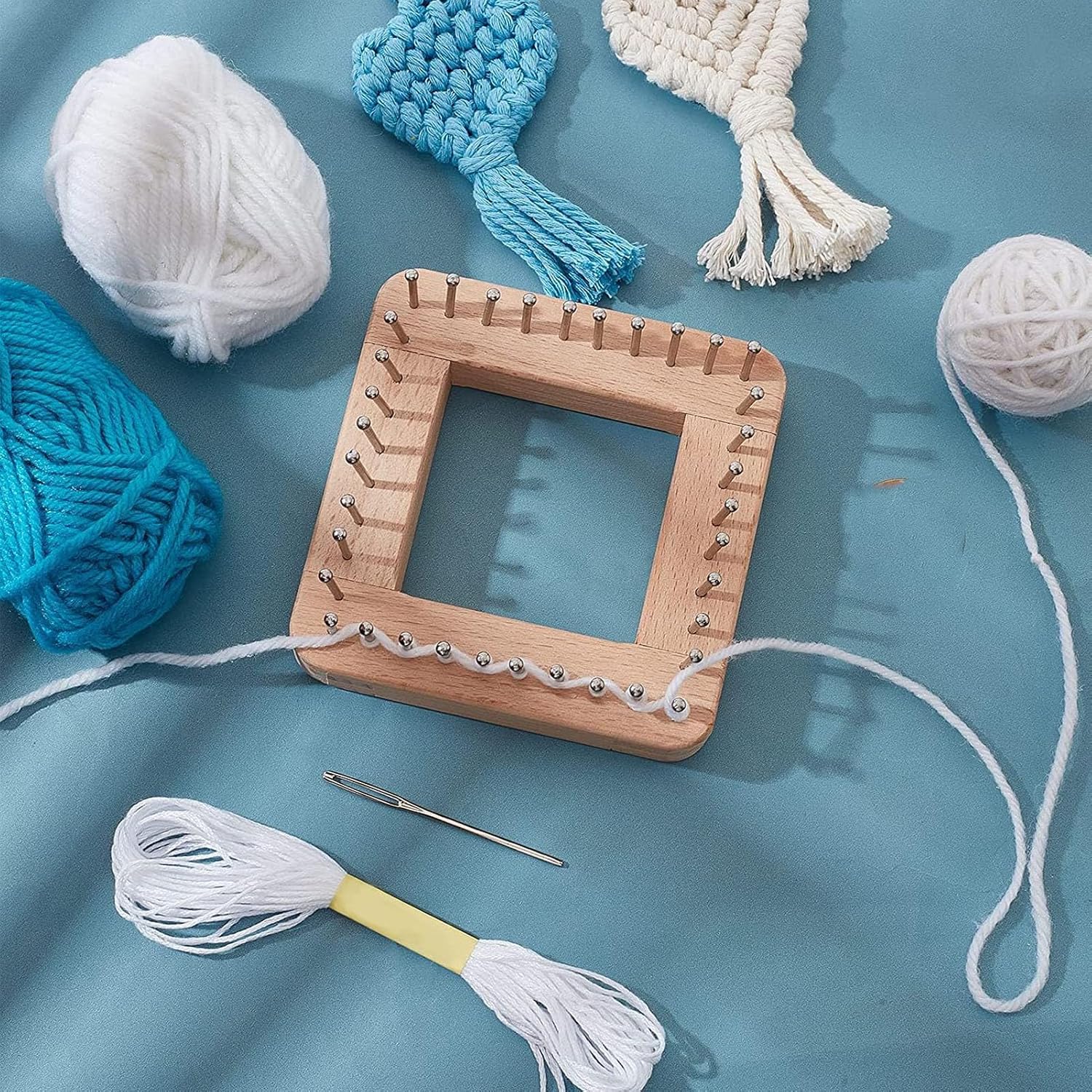
At first glance, the KnitPro Signature Wooden Blocking Board stands out due to its elegant, minimalist construction. It isn’t just a flat surface; it is a structured frame designed to provide both stability and visibility during the blocking process.
Natural Wood Construction
The most striking feature is the material itself. The board is crafted from a high-quality, light-toned wood with a visible, clean grain. Unlike plastic blocking mats, which can sometimes feel flimsy or even warp under heavy steam or tension, this wooden frame feels substantial. The wood provides a natural weight that helps the board stay put on your workspace, which is crucial when you are pulling at delicate lace or heavy wool. The finish appears smooth and well-sanded, a critical detail because any splinter or rough patch in the wood could snag a precious strand of silk or mohair.
Precision Metal Peg System
Surrounding the perimeter of the wooden frame is a series of integrated metal pegs. These aren’t just simple nails; they are polished, rounded metal pins that are spaced with mathematical precision around the edges. These pegs serve a dual purpose. First, they allow you to pin your project directly to the frame to maintain tension. Second, as seen in many professional setups, they can be used to tension yarn or create structured shapes. The rounded heads of the pins are designed to minimize the risk of fiber damage, allowing you to slide your work on and off without the dreaded “snag and pull” that often happens with cheaper, sharper pins.
Open Frame Design
The “donut” or frame-style design is a clever ergonomic choice. By having a large open center, the board allows you to see exactly what is happening with your stitches. If you are blocking a piece that needs to be stretched across the frame, you can monitor the tension from both sides. This visibility is essential for ensuring that you aren’t over-stretching one corner while leaving another loose, a common mistake when working on solid, opaque blocking mats.
Design & Real-World Quality
When evaluating a tool like this, I look at how it handles the actual “work” of crafting. A blocking board needs to withstand moisture (from steaming) and tension (from stretching). The KnitPro Signature Wooden Blocking Board feels built for longevity.
The weight distribution is excellent. When you are working with heavy cotton or chunky wool, you need a base that won’t slide across the table every time you apply pressure. The wood provides a much higher coefficient of friction than smooth plastic, meaning it “grips” your workspace better. I also noted the seamless joinery of the wooden frame; the corners are sturdy, suggesting that this won’t pull apart even when you are applying significant tension to a large project.
The texture of the wood is another win for quality. In my experience, many wooden craft tools can feel “dry” or “thirsty,” sometimes even absorbing moisture from the air or your hands in a way that feels unpolished. This board, however, has a smooth, almost satin-like finish. This is vital for fiber artists because it ensures that as you slide your project around to adjust the shape, the wood works *with* your yarn rather than against it. The metal pins feel securely embedded into the wood, which gives me confidence that they won’t wiggle loose or pop out during a heavy-duty blocking session.
What Crafters Are Saying
While I approach this from a technical and research-based perspective, looking at the broader consensus among the crafting community provides a clearer picture of the “user experience.” When looking at high-end wooden tools like this, the feedback generally falls into a few key themes.
The most common praise centers on the aesthetic and tactile experience. Many crafters mention that using tools that look beautiful on their craft table actually makes the “chore” of blocking feel more like a luxurious part of the creative process. There is a definite sentiment that this tool feels “professional” compared to the utilitarian plastic mats found in most kits.
Regarding performance, the consensus is that the stability provided by the wooden frame is a significant upgrade. Users who work with lace or fine-gauge yarns appreciate the precision of the metal pegs, noting that they can achieve much more controlled, even tension. However, there is a recurring practical note: because this is a frame rather than a solid mat, it is clearly intended for specific types of projects—specifically those that can be tensioned or pinned around the perimeter. It isn’t a replacement for a large, flat blocking mat if you are working on a massive, solid king-sized blanket, but rather a precision tool for structured items.
In terms of durability, most feedback suggests that as long as the wood is kept away from extreme humidity, it remains a lifelong tool. There are very few complaints regarding the metal pegs, with most users finding them to be sturdy and easy to work with.
Pros & Cons
Pros
- Premium, natural wood construction offers superior stability over plastic.
- Smooth, high-quality finish prevents yarn snagging and fiber damage.
- Precision-spaced metal pegs allow for highly controlled tensioning.
- Elegant, professional aesthetic that complements a high-end craft space.
- Open-frame design provides excellent visibility of stitches during the blocking process.
- Sturdy, durable build designed for long-term professional use.
Cons
- Geometric frame shape limits its use for very large, solid items like oversized blankets.
- Requires additional pins or accessories for certain complex blocking styles.
- More specialized than a standard blocking mat, meaning a steeper learning curve for total beginners.
Who It’s For
The KnitPro Signature Wooden Blocking Board is not a “one size fits all” tool, and that is actually its strength.
This is for you if: You are an intermediate to advanced crocheter or knitter who is obsessed with the finishing details. If you make a lot of garments, lace shawls, home decor like pillows or table runners, or structured amigurumi, this tool will elevate your work. It is also perfect for those who appreciate the “slow craft” movement and enjoy using tools that are as beautiful as the items they create.
This might not be for you if: You are a total beginner who only works with chunky yarns and doesn’t yet see the need for specialized shaping tools. If your primary goal is blocking massive, heavy blankets that require a large, flat surface area, a traditional foam or cork blocking mat might be a more practical (and budget-friendly) starting point.
Final Verdict & Tips
The KnitPro Signature Wooden Blocking Board is a high-quality, specialized instrument that bridges the gap between hobbyist crafting and professional fiber art. It excels in providing the stability, precision, and tactile feedback required to achieve perfectly symmetrical, professionally finished pieces. While it serves a specific niche of geometric or perimeter-tensioned blocking, the quality of the wood and the precision of the pegs make it a standout piece in any serious maker’s toolkit.
To get the best results from your blocking board, keep these tips in mind:
- Steam with Caution: If you are using a steam iron to block your project on the board, be careful not to let the iron directly touch the wooden frame. Aim the steam at your project to avoid any potential moisture damage to the wood.
- Test Your Tension: When tensioning yarn across the pegs (as shown in the product imagery), do so gradually. Start loose and tighten in small increments to ensure you don’t accidentally over-stretch your stitches.
- Maintain the Wood: To keep the board in top condition, store it in a dry place. If the wood ever begins to feel slightly dry after years of use, a tiny amount of food-safe mineral oil can help restore its smooth, snag-free finish.
- Pair with Quality Pins: While the integrated pegs are excellent, keep a set of high-quality, T-pin style blocking pins nearby to help bridge the gap between the pegs and your delicate lace edges.