
Master Your Crochet Tension: Tips for Perfect Stitches Every Time
Ever feel like you’re fighting your own yarn? You follow a pattern to a T, but your finished blanket is six inches smaller than it should be, or your “beginner-friendly” scarf looks more like a piece of fishnet than a cozy winter accessory. If that sounds familiar, you’ve probably run into the great crochet mystery: tension.
Tension is one of those things that seasoned crocheters talk about like it’s a magical secret, but it’s actually just a fancy word for how tightly or loosely you hold your yarn and create your stitches. The good news? It isn’t something you’re just “born with.” It’s a skill you can tweak and master with a little bit of patience and a few tricks up your sleeve.
What Exactly Is Crochet Tension?
Before we dive into the “how-to,” let’s clear something up. In the crochet world, people often use the words tension and gauge interchangeably, but they aren’t exactly the same thing.
Tension is the physical act of how you hold the yarn and the amount of pressure you apply while making a stitch. It’s the “input.”
Gauge is the result of that tension. It’s the number of stitches and rows that fit into a specific square (usually 4 inches). It’s the “output.”
If your tension is too tight, your gauge will be small. If your tension is too loose, your gauge will be large. Understanding this is key because if you can control your tension, you can nail your gauge, and your projects will actually fit the people they’re meant for!
Signs Your Tension Is Out of Whack
How do you know if you need to adjust your tension? Your project will usually tell you!
The “Too Tight” Struggle
If you find yourself struggling to push your hook into the stitch for the next row, you’re likely tensioning too tightly. Other signs include:
- Your fabric feels stiff or board-like instead of drapey.
- Your hands or wrists start to ache quickly.
- Your project is significantly smaller than the pattern says it should be.
The “Too Loose” Look
On the flip side, if your project looks “holey” or gappy, your tension might be too loose. Look for:
- Large gaps between your stitches (unless the pattern calls for a lace look).
- The fabric feels flimsy or loses its shape.
- Your project is way larger than the sample size.
How to Tension Your Yarn: The Basics
There is no one “right” way to hold yarn—everyone’s hands are different! But there are a few common methods you can try to find what feels natural for you. The goal is to create a consistent “glide” of yarn from the skein to your hook.
The Classic Index Finger Wrap
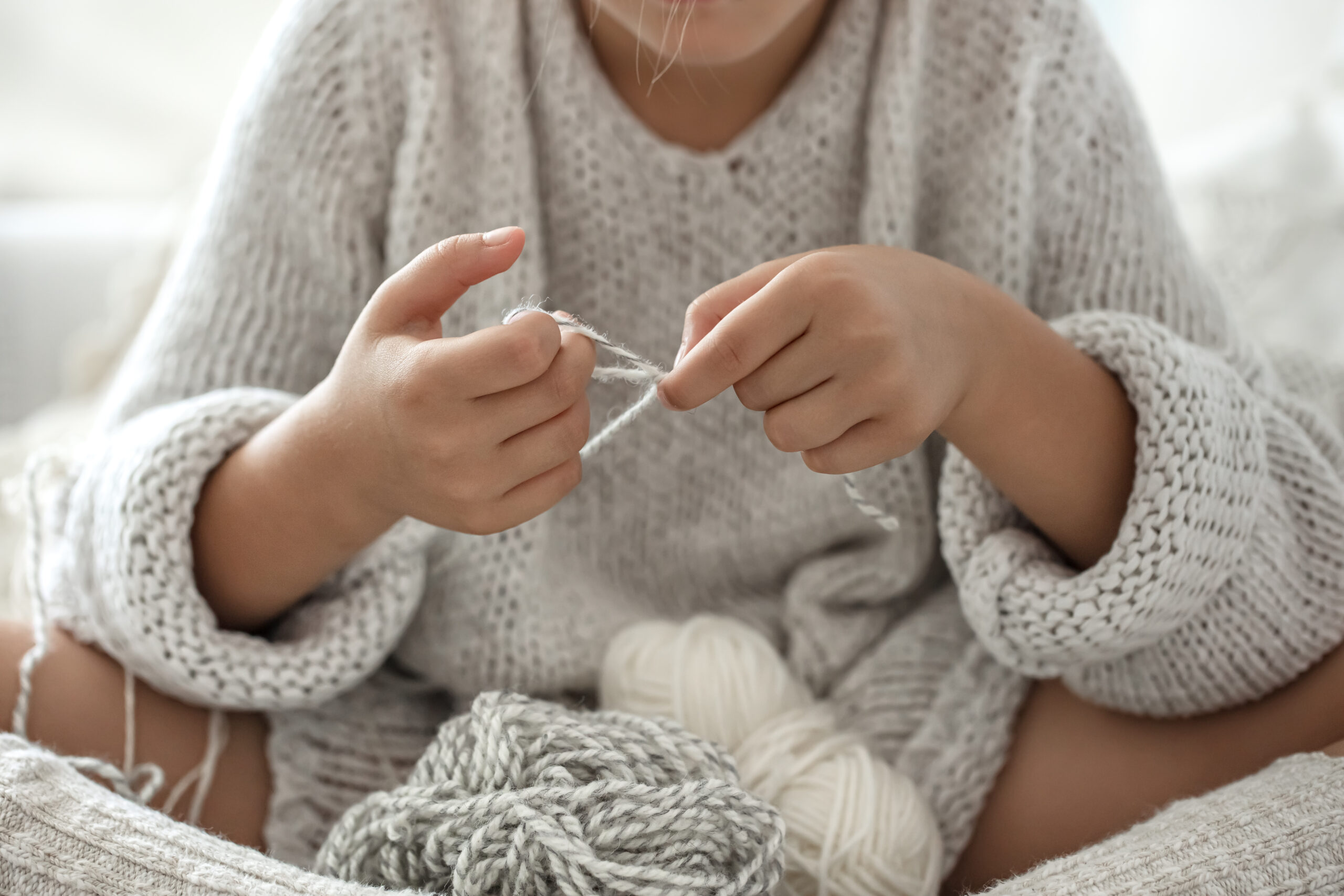
This is where most of us start. You hold the yarn in your non-dominant hand and wrap it once around your index finger. The yarn then goes under the middle and ring fingers before exiting the palm of your hand. This gives you a basic level of resistance, allowing you to pull the yarn to the desired tightness as you loop it over the hook.
The “Over and Under” Method
If the classic wrap feels too loose, try weaving the yarn. Instead of just wrapping it once, you can weave it under your middle finger, over your index, and back under again. This adds more friction, which helps “tighten” the yarn before it even reaches your hook. It’s a great trick for those of us who naturally crochet too loosely.
The Pinky Anchor
Some crocheters find that anchoring the yarn with their pinky finger helps maintain a steady flow. By hooking the yarn around your pinky, you create a stable base that prevents the yarn from slipping too quickly, giving you more conscious control over each loop.
Quick Fixes for Tension Troubles
If you’ve tried different finger wraps and you’re still not hitting that perfect gauge, don’t panic. There are other ways to cheat the system!
Change Your Hook Size
Here is a pro tip: You don’t always have to change how you crochet; sometimes you just need to change your tool.
- Too tight? Go up a hook size (e.g., move from a 5.0mm to a 5.5mm). This gives you more room to breathe and creates a looser stitch.
- Too loose? Go down a hook size (e.g., move from a 5.0mm to a 4.5mm). This forces the stitches to be smaller and tighter.
Check Your Posture
This sounds weird, but your shoulders affect your stitches. If you’re hunched over or gripping the hook like your life depends on it, your tension will be erratic. Take a deep breath, drop your shoulders, and try to keep a relaxed grip. The more relaxed you are, the more consistent your tension will be.
The Magic of the Swatch
I know, I know—nobody likes making swatches. We just want to start the project! But making a 4×4 inch square in the stitch the pattern requires is the only way to truly know your tension. If the swatch is too small, try a bigger hook. If it’s too big, try a smaller hook. It saves you from the heartbreak of finishing a sweater only to realize it fits a doll instead of a human.
Common Tension Questions
Should I buy a tension regulator or ring?
You might see “tension rings” sold online. While some people love them, they aren’t a necessity. Most of the time, you can achieve the same result by simply adjusting how you wrap the yarn around your fingers. Try the free methods first!
Why does my tension change halfway through a project?
This happens to the best of us! It’s usually due to fatigue, stress, or even the yarn itself. If you’re tired, you might loosen up. If you’re frustrated, you might tighten up. If you notice a change, take a break, stretch your hands, and check your work against your original swatch.
Does the type of yarn affect tension?
Absolutely. Slippery yarns (like silk or bamboo) tend to feel looser, while “grippy” yarns (like wool or acrylic) can feel tighter. You might find that you have perfect tension with one brand of yarn but struggle with another. That’s totally normal!
Wrapping It All Up
At the end of the day, crochet is supposed to be relaxing. While hitting a perfect gauge is important for garments, don’t let the obsession with tension take the joy out of your craft. If you’re making a freeform scarf or a cozy blanket, a little bit of “character” in your stitches is perfectly fine.
Just remember: relax your grip, experiment with your finger wraps, and don’t be afraid to swap out your hook. Keep practicing, and before you know it, your tension will be second nature. Happy hooking!