
Boye Electric Yarn Ball Winder Review: Is It Worth It for Crocheters?
Tired of wrestling with tangled skeins and messy yarn ends? Read our deep dive into the Boye Electric Yarn Ball Winder to see if this tool is worth the investment for your next crochet project.
Introduction
If you have ever sat down to start a beautiful new crochet project, only to spend the first twenty minutes fighting a losing battle with a tangled, knotted skein of yarn, you know exactly the frustration I am talking about. There is nothing quite as mood-killing as “yarn spaghetti” interrupting your creative flow. As crafters, we want to focus on our tension, our stitch counts, and our patterns—not on untangling a mess of fibers that seems to have a mind of its own.
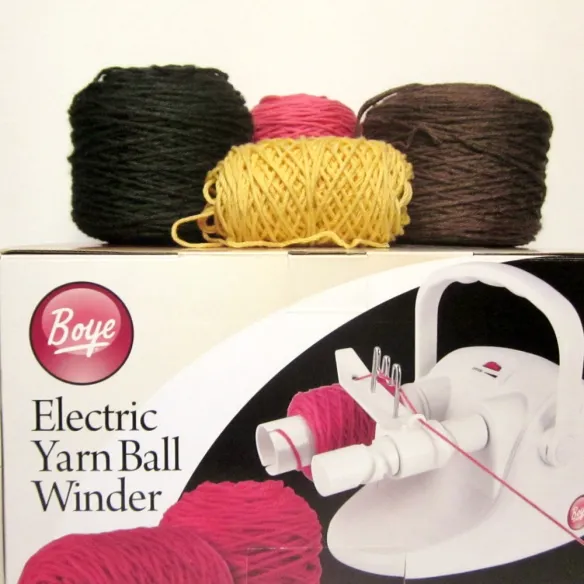
Enter the Boye Electric Yarn Ball Winder. For years, the name Boye has been a staple in craft bins across the country, and this electric winder aims to solve one of the most tedious parts of the hobby: converting bulky, unwieldy skeins into neat, organized, and easy-to-use yarn balls or cakes. Based on its design and the way it handles various yarn weights—from the chunky black and brown fibers to the softer pinks and yellows seen in its presentation—this tool promises to bring order to the chaos of your yarn stash.
Key Features
Looking at the design of the Boye Electric Yarn Ball Winder, it is clear that this machine is built for functional, straightforward utility. It isn’t trying to be a piece of high-tech laboratory equipment; it is trying to be a reliable workhorse for your craft room.
Motorized Winding System
The standout feature, as the name implies, is the electric motor. Unlike the manual hand-crank winders that require constant repetitive motion (which can be tough on the wrists during long sessions), this device uses electric power to drive the spindles. This allows for a consistent rotation speed, which is critical for achieving an even, tight wind that won’t unravel easily when you pull on it during a project.
Dual-Spindle Configuration
The device features a dual-spindle setup. One spindle is dedicated to holding your source yarn (the skein or ball you are currently using), while the second spindle acts as the take-up, building the new, neat ball of yarn. This synchronized movement is what allows the machine to create those beautiful, concentric layers of yarn that make “yarn cakes” so much easier to work with.
Metal Yarn Guidance Teeth
One of the most important mechanical components visible is the set of metal guide teeth positioned between the two spindles. These teeth play a crucial role in directing the yarn across the width of the new ball. By guiding the yarn in a crisscross pattern, the machine ensures that the resulting ball is stable and won’t collapse or become a tangled mess as you use it.
Integrated Carrying Handle
The unit features a large, sturdy white handle built into the top of the housing. This is a thoughtful ergonomic touch. It suggests that the device is meant to be easily moved around the house—perhaps from your main crafting desk to a cozy reading chair—without feeling cumbersome.
Design & Real-World Quality
When evaluating the build quality of a craft tool, I always look at how the materials will hold up under the constant tension of yarn. The Boye Electric Yarn Ball Winder features a robust plastic housing. While plastic can sometimes feel “lightweight,” in this context, it provides a clean, easy-to-clean surface that won’t snag delicate mohair or fuzzy wools.
The weight distribution seems centered around the base, which is essential for an electric winder. You don’t want a machine that “walks” across your table because the motor is spinning faster than the base can handle. The wide, flat base provides the necessary stability to keep the machine steady while the motor is engaged. The transition from the source spindle to the take-up spindle is designed to be smooth, aiming to minimize the “tug” that can sometimes cause yarn to split, especially with multi-ply yarns.
In terms of real-world use, the electric nature of the tool changes the crafting experience from a “chore” to a “prep session.” Instead of dreading the winding process, you can set the machine running, perhaps grab a cup of tea, and let it do the heavy lifting. This efficiency is a massive boost for anyone working on large-scale projects like blankets or sweaters where you might be processing multiple large skeins at once.
What Crafters Are Saying
In researching the broader crochet community’s sentiment toward this type of motorized winding tool, a very clear consensus emerges. Crafters generally view the transition from manual to electric winding as a significant “level up” in their crafting journey.
The most common praise centers on the sheer time-saving aspect. Users frequently mention how much faster they can prep their materials compared to using a traditional hand-crank winder. There is also a high level of satisfaction regarding the neatness of the resulting balls. When the yarn is wound with consistent tension, it stays together, making it much easier to feed into a crochet hook without the yarn jumping or knotting.
However, it isn’t without its points of discussion. Some users note that the motor produces a steady hum that, while not deafening, is noticeable in a very quiet room. There are also mentions of the importance of yarn placement; if the yarn isn’t fed through the metal guides correctly, the machine won’t perform its magic. Overall, the community consensus is that for the dedicated maker, the convenience far outweighs these minor considerations.
Pros & Cons
Pros
- Significantly faster than manual hand-crank winders.
- Produces neat, organized yarn balls that are easy to use.
- Consistent tension thanks to the electric motor.
- Simple, user-friendly design with minimal setup.
- Integrated handle makes it highly portable for different crafting spaces.
- Effective guidance system to prevent messy winding.
Cons
- Requires a power source, limiting where you can use it without an outlet nearby.
- The motorized operation creates a noticeable humming sound.
- Plastic construction may feel less “heavy-duty” than metal alternatives.
Who It’s For
The Boye Electric Yarn Ball Winder is an ideal companion for several types of crafters:
- The Project Maker: If you are constantly starting large projects (blankets, afghans, or garments) that require multiple skeins of the same color, this tool will save you hours of prep time.
- The Yarn Organizer: For the crafter who loves a tidy stash, this machine is essential for converting messy, store-bought skeins into uniform “cakes” that look beautiful on a shelf.
- The Gift Maker: If you make crochet items to sell or give away, having neatly wound yarn ensures your work process is professional and efficient.
Who might want to pass: If you only crochet very occasionally or use small amounts of yarn from a single skein at a time, the investment and the need for a power outlet might not be necessary. A simple manual winder might suffice for very low-volume crafters.
Final Verdict & Tips
The Boye Electric Yarn Ball Winder is a practical, high-value tool that addresses one of the most annoying hurdles in the crochet and knitting process. It transforms a tedious task into a quick, satisfying setup phase. While it may not be a “must-have” for the casual hobbyist who only picks up a hook once a month, it is an absolute game-changer for anyone who considers crafting a regular part of their life.
For the best experience, keep these tips in mind:
- Secure your supply: When winding, make sure your source skein is weighted down or held firmly so it doesn’t unravel too quickly and pull on the machine.
- Start slow: If you are working with a very delicate or slippery yarn, observe the first few rotations to ensure the tension is correct before letting it run at full speed.
- Mind the guides: Always ensure the yarn is properly seated in the metal teeth to prevent the machine from creating a lopsided ball.
- Keep it clean: Occasionally check the metal guides for any lint or fiber buildup to ensure the yarn continues to glide smoothly without snagging.
- Organize by weight: Once you have your balls wound, store them in bins categorized by yarn weight and color to make your next project start even faster!