
Stuck in the Yarn Aisle? The Ultimate Guide to the Best Yarn for Beginners
So, you’ve decided to pick up a crochet hook and start your crafting journey. First of all: welcome to the club! Crochet is an amazing hobby—it’s relaxing, productive, and there is nothing quite like the feeling of wearing something you actually made with your own two hands.
But then you walk into the craft store. You hit the yarn aisle, and suddenly, you’re staring at a wall of thousands of colorful skeins. You see words like “Worsted,” “DK,” “Acrylic,” “Bamboo,” and “Bouclé.” It’s enough to make anyone want to turn around and walk right back out the door.
Here is the secret: not all yarn is created equal, especially when you’re just starting out. Some yarns are a dream to work with, while others are a total nightmare for a beginner. To save you from the frustration of “frogging” (that’s crochet-speak for ripping out your work) your project ten times, let’s break down exactly what the best yarn for beginners looks like.
The Golden Rule: Stitch Definition is Everything
Before we talk about materials, we need to talk about stitch definition. When you are first learning how to make a single crochet or a double crochet, you need to actually be able to see where your hook is supposed to go. You need to see the “V” on top of the stitch and the gaps between the rows.
If you pick a yarn that is too fuzzy, too dark, or too textured, those stitches disappear. You’ll spend twenty minutes squinting at your work, wondering why your square is suddenly becoming a triangle. For your first few projects, your goal is clarity over “fancy.”
The Best Yarn Materials for New Crocheters
You don’t need to spend a fortune on high-end hand-dyed wool to start. In fact, you probably shouldn’t! Here are the best fiber choices for beginners, ranked from “most recommended” to “proceed with caution.”
1. Acrylic Yarn (The Beginner’s Best Friend)
If you’re wondering where to start, start here. Acrylic yarn is synthetic, which means it’s usually affordable and comes in every color imaginable. Most importantly, it’s generally smooth and consistent.
- Why it’s great: It’s cheap (so you don’t feel bad if you mess up), it’s durable, and it’s usually machine-washable.
- What to look for: Look for “premium acrylic” or “anti-pilling” acrylics. These feel softer and aren’t as “plastic-y” as the super cheap stuff.
2. Cotton Blends
Pure cotton can be a bit stiff and lacks “give,” which can make your hands tire out faster. However, a cotton blend (like cotton and acrylic) is a fantastic middle ground.
- Why it’s great: It has a lovely weight to it and doesn’t stretch as much as pure acrylic, making it perfect for washcloths, coasters, or bags.
- Pro Tip: If you want to make something that needs to hold its shape, go for a blend.
3. Wool Blends
Wool is cozy and classic, but 100% wool can be expensive and sometimes itchy. A wool blend is a great way to get that warmth and “bounce” without the high price tag or the skin irritation.
- Why it’s great: Wool blends are more elastic than cotton, which makes them more forgiving if your tension is a little inconsistent.
Understanding Yarn Weight (The Numbers Game)
On every ball of yarn, you’ll see a small symbol that looks like a skein of yarn with a number inside it. This is the yarn weight, and it tells you how thick the yarn is. Using the wrong weight for your hook is the fastest way to end up with a project that is either as stiff as a board or looks like a fishnet.
The Sweet Spot: Medium/Worsted Weight (Weight 4)
For beginners, Weight 4 (Medium/Worsted) is the undisputed champion. Why? Because it’s the “standard” size. Most beginner patterns are written for worsted weight, and it’s thick enough to see your stitches but thin enough to handle easily.
Weights to Avoid (For Now)
- Lace or Fingering Weight (Weight 0-1): These are tiny, thin threads. They are beautiful for socks or shawls, but they are a nightmare to learn with because the stitches are nearly invisible.
- Jumbo or Super Bulky (Weight 6-7): While these work up fast, they can be clunky and make it harder to practice the actual mechanics of the hook movement.
The Color Secret: Light and Solid
This is the most important piece of advice I can give you: Do not buy black, navy blue, or dark purple yarn for your first project.
I know, I know. Dark colors are chic and sophisticated. But when you are learning, dark yarn absorbs light, making it almost impossible to see the holes where you need to insert your hook. You will find yourself fighting the yarn, and it will turn a relaxing hobby into a stressful chore.
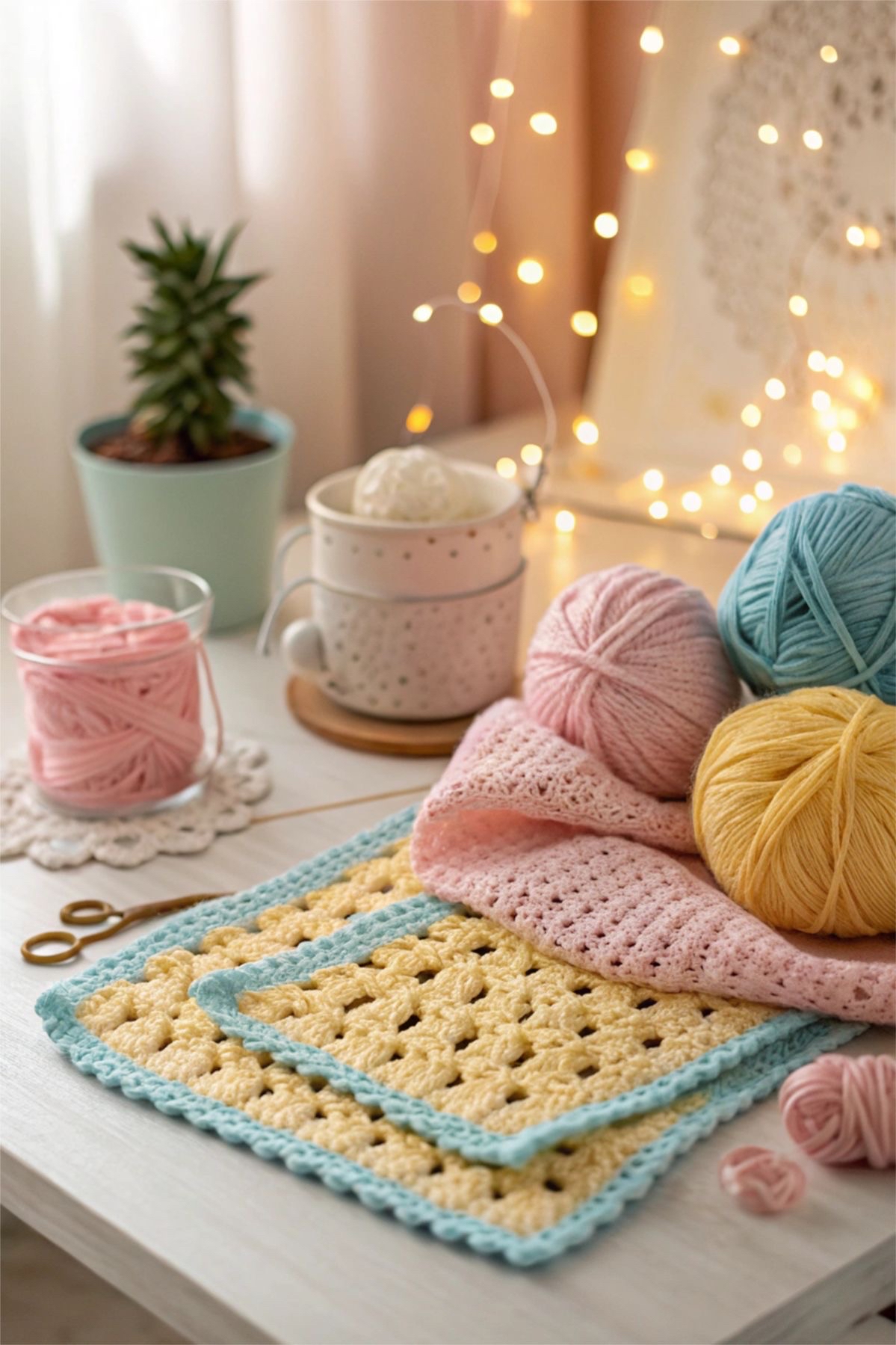
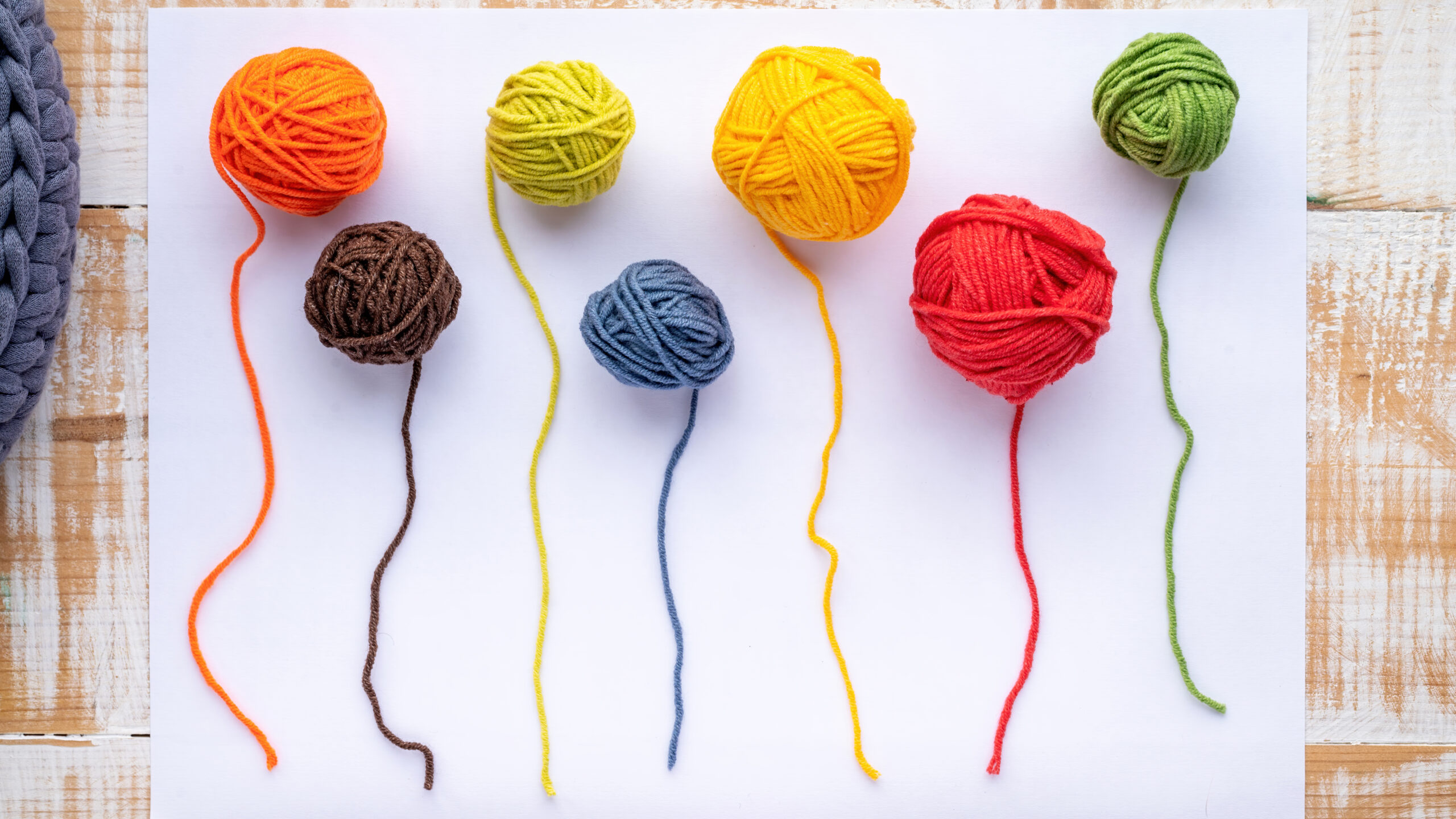
Instead, go for light, solid colors. Think mint green, soft yellow, baby blue, or a classic cream. These colors reflect light and make your stitches pop, allowing you to spot mistakes instantly and fix them before they become a bigger problem.
The “No-Go” List: Yarns to Avoid as a Beginner
Some yarns are just “expert mode” yarns. Even experienced crocheters sometimes struggle with these. Avoid these until you’ve mastered the basics:
- Bouclé or “Fuzzy” Yarn: If the yarn has little loops or a halo of fuzz, stay away. You won’t be able to see your stitches, and the fuzz often gets caught in the hook.
- Velvet or Chenille: These are incredibly soft (great for plushies!), but they are slippery. They slide off the hook easily and can be very frustrating for someone still learning tension.
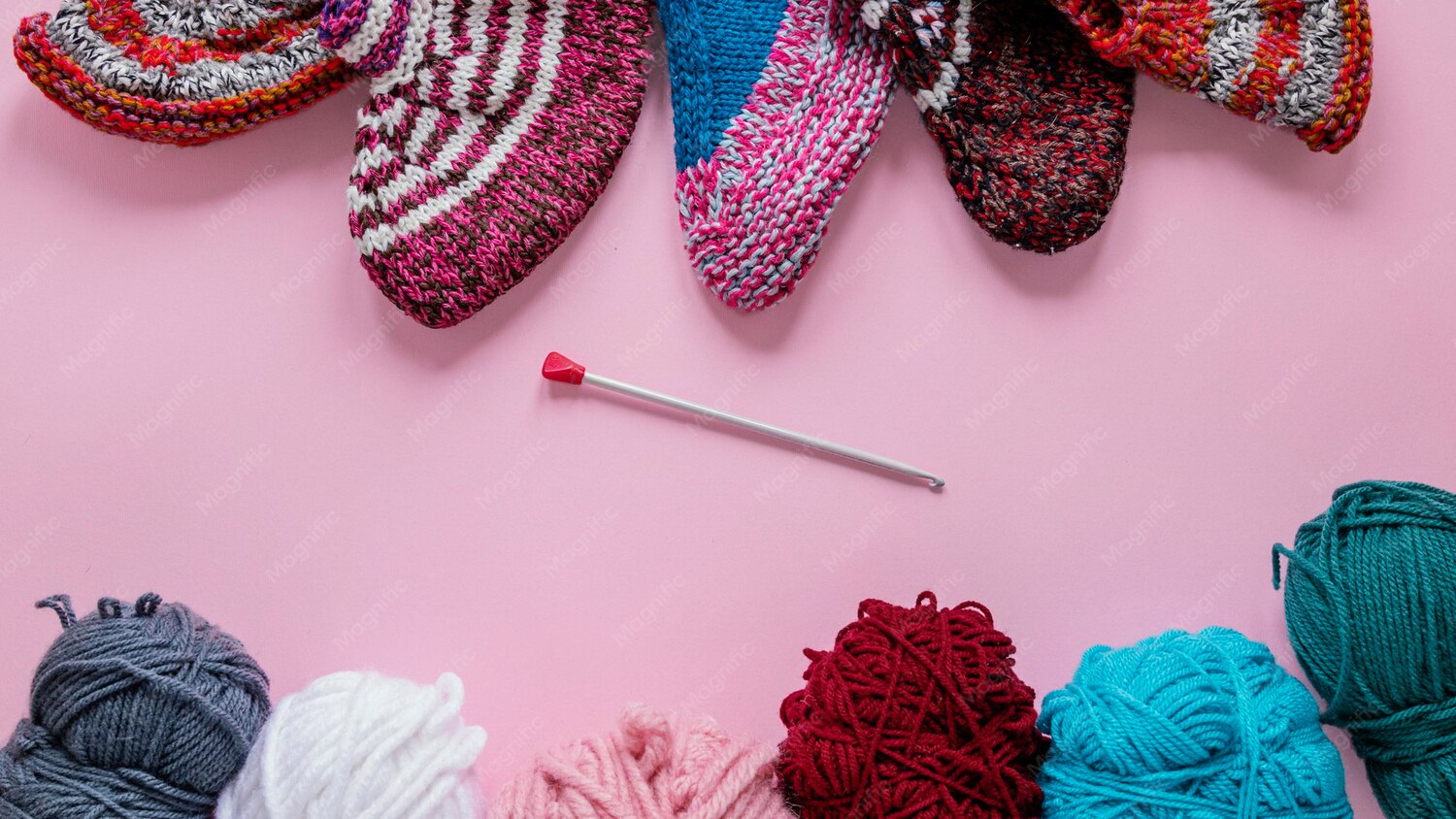
- Highly Variegated/Multicolor Yarn: Yarn that changes color every inch looks cool in the skein, but it can “camouflage” your stitches. It makes it hard to tell where one stitch ends and the next begins.
Quick Guide: Matching Your Yarn to Your Hook
Once you’ve picked your yarn, you need a hook that matches. You can usually find the recommended hook size on the yarn label, but if you’re using Weight 4 (Worsted) yarn, a 5.0mm (H-8) hook is the standard starting point.
A little tip on tension: If you find that your stitches are too tight and you’re struggling to get the hook through, try moving up one hook size (to a 5.5mm or 6.0mm). If your work looks too loose and “holey,” move down to a 4.5mm hook.
Common Beginner Yarn Struggles (and How to Fix Them)
“My yarn keeps splitting!”
This happens when your hook catches only a few strands of the yarn instead of the whole thing. This usually happens with cotton yarns or very cheap acrylics. To fix this, make sure you are inserting your hook fully through the stitch and using a hook size that matches the yarn weight.
“My project is turning out stiff as a rock!”
This is usually a combination of two things: using a cotton yarn (which has no stretch) and having “tight tension” (pulling the yarn too hard). Try to relax your grip and consider switching to a slightly larger hook.
Final Takeaway: Just Start!
At the end of the day, the “best” yarn is the one that makes you excited to sit down and create. While following these guidelines will definitely make your learning curve smoother, don’t let the fear of picking the “wrong” yarn stop you from starting.
Grab some light-colored, medium-weight acrylic yarn, a 5.0mm hook, and a simple pattern. Before you know it, you’ll be moving past the basics and venturing into those fancy velvets and mohairs. Happy hooking!