
How to Create Magical Christmas Home Decor Ideas: A DIY Guide for 2025
Kitchen and dining spaces function as central hubs for holiday entertaining, requiring decoration strategies that complement their practical purposes. These frequently used areas benefit from targeted DIY enhancements that maintain functionality while introducing festive elements through thoughtful design choices.
Poinsettia Centerpiece Construction:
Poinsettias dominate the Christmas plant market, with nearly 80 million sold during the six-week holiday period, generating approximately $250 million in annual U.S. economic activity. Standard grocery store poinsettias transform into sophisticated centerpieces when removed from commercial packaging and repositioned in decorative containers such as white scalloped bowls.
Centerpiece enhancement strategies:
- Position berry picks, ornament picks, and pinecones around the plant base
- Integrate foraged evergreen materials including pine and cedar for textural contrast
- Layer festive plaid fabric beneath as coordinating table runner elements
Quality assessment focuses on the central yellow flowers (cyathia) within the colored bracts—fresh specimens display bright yellow centers rather than brown deterioration. For table arrangements requiring sight lines between guests, cut poinsettia blooms function effectively as sculptural elements when stem ends receive immediate heat treatment to prevent sap flow and subsequent wilting.
Santa’s Cookie Station Design:
Designated cookie and milk presentation areas create memorable Christmas Eve traditions through specialized placemats. Cricut machines with iron-on vinyl enable personalized designs that develop into cherished family customs.
Red felt serves as an optimal base material for single-use annual applications, requiring minimal maintenance throughout the year. Effective designs incorporate circular placement indicators for plates and cups, directional guidance arrows, and seasonal text elements. Iron-on vinyl applications require text mirroring during the cutting process.
These functional decorations occupy minimal storage space between seasons—simple folding or rolling techniques integrate them efficiently with other holiday storage items.
Chair Decoration Applications:
Chair enhancement techniques elevate dining spaces through minimal intervention approaches. Pinecone swags with red velvet ribbon attachments create sophisticated accent pieces suitable for both interior and exterior applications. Standard swag lengths measure approximately 22 inches with multiple pinecone elements providing visual interest.
DIY construction involves hot-glue assembly of evergreen sprigs with twine stem wrapping, maintaining extended tie lengths for chair back attachment. Commercial alternatives include mixed pine foliage, cedar branches, berry elements, and coordinating ornament components.
Faux-sheepskin throws draped over hardback dining chairs encourage extended conversation periods during holiday meals while providing textural warmth. Neutral coloring ensures compatibility with diverse holiday decoration schemes.
Holiday Decorating: Bedrooms and Children’s Areas
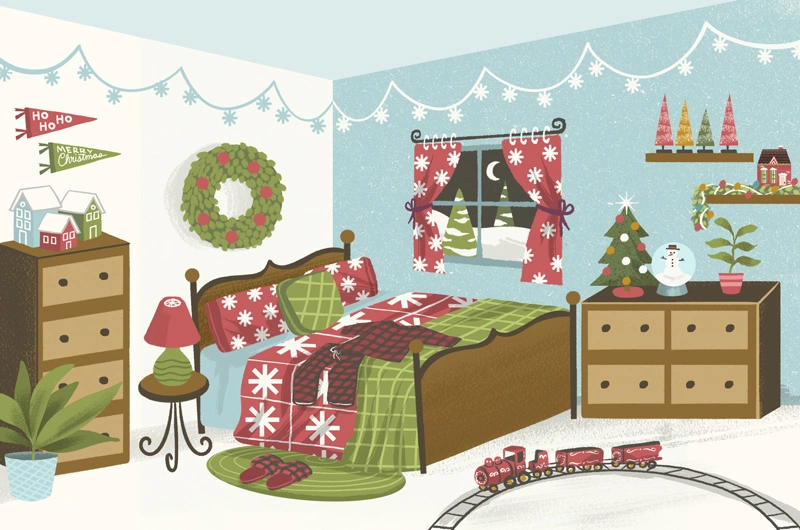
Image Source: Hallmark Ideas
Bedrooms and children’s areas provide distinct opportunities for targeted holiday decorating that extends festive atmosphere throughout your home. These private spaces allow for personalized decoration approaches that cater to individual family members while maintaining cohesive holiday themes.
Tabletop Trees: Boxwood and Felt Options
Compact tree alternatives suit bedrooms where floor space remains limited. The boxwood approach requires:
- Foam cone base from craft supply stores
- Fresh boxwood clippings inserted directly into foam
- Miniature ornaments or battery-operated lights
- Decorative container for stability
For long-term use, felt trees offer maintenance-free alternatives. Cut triangular felt pieces in graduated green shades, roll into cone shapes, and secure to foam cores using straight pins. Multiple felt trees create forest displays suitable for nightstands or dresser arrangements.
Cardboard Structure Projects for Play Areas
Large appliance boxes convert into functional play structures that serve dual decorative purposes. Collect boxes from electronics retailers, then cut entrance and window openings using utility knives. Paint exteriors to resemble gingerbread architecture with white outline details and colored accent elements.
Children participate in decoration phases using washable paints and recycled materials for personal customization. Battery-powered string lights installed inside provide ambient lighting that enhances both play value and decorative appeal throughout the holiday season.
Strategic Stocking Placement
Holiday stockings extend beyond traditional fireplace hanging to include bedroom-specific locations. Bedpost mounting, doorknob hanging, and wall hook installation provide personalized holiday corners for each family member.
Miniature stockings work particularly well in children’s rooms, holding small treats or handwritten notes that build anticipation toward Christmas morning. Removable adhesive hooks enable temporary installation on bookshelves, bed frames, and furniture edges without permanent mounting hardware.
Personalized Ornament and Gift Development

Image Source: Little Cooks Reading Books
Handcrafted ornaments and personalized gifts establish lasting connections between your decorating efforts and meaningful holiday traditions. These targeted projects convert basic craft supplies into distinctive keepsakes that carry personal significance beyond their decorative function.
Transform Old Baubles: Raffia and Jute Applications
Outdated ornaments gain renewed purpose through natural material wrapping techniques. The upcycling process requires minimal supplies while producing professional-quality results. Standard jute-wrapping operations demand these components:
- Previously owned ornaments in any condition
- Natural jute string or raffia material
- Hot glue application tool
The wrapping procedure begins at the ornament’s metal cap, where initial glue application creates the anchor point for material attachment. Consistent wrapping motion combined with periodic glue dots every third layer ensures secure adhesion throughout the process. Larger ornaments benefit from sectional completion, as adhesive setting time prevents shifting during extended wrapping periods.
Raffia balloon techniques offer an alternative approach. This method involves dipping raffia strands in diluted craft adhesive before application around inflated water balloons, creating textured spherical ornaments once the balloon material is removed.
Vintage Ornament Wreath Construction
Ornament wreaths demonstrate advanced crafting techniques that require significant time investment and material coordination. Professional-quality results typically demand 75 to 150 ornaments in graduated sizes, supported by foam wreath foundations and metallic tinsel backing.
The construction sequence prioritizes tinsel application across the foam base, maintaining volume throughout the wrapping process. Ornament attachment follows a dual-adhesion approach: primary glue contact with the foundation plus secondary contact points between adjacent ornaments. This method creates structural stability that prevents ornament displacement during handling or display.
Color and size distribution requires periodic assessment from multiple viewing angles to ensure balanced visual weight across the completed wreath form.
Advent Calendar: Takeout Container System
Mini takeout containers provide the foundation for functional advent calendars that serve dual decorative and interactive purposes. The system employs numerical identification stickers applied to individual containers, each filled with appropriate seasonal content—treats, small gifts, or daily activity instructions.
Container arrangement flexibility allows creative stacking patterns or child-directed organization, enhancing anticipation while serving as dynamic decorative elements throughout December. The project’s modular nature accommodates various space configurations and storage requirements once the holiday season concludes.
Conclusion
Christmas home decoration projects demonstrate that effective holiday design stems from strategic material selection and systematic implementation rather than expensive commercial products or specialized design expertise. The featured techniques illustrate how basic supplies combined with focused creativity produce distinctive holiday environments. Natural materials paired with strategic repurposing practices offer both cost efficiency and customization opportunities that mass-market decorations cannot provide.
These DIY Christmas decoration approaches offer significant flexibility across different design preferences. Rustic elements like repurposed footwear for porch displays appeal to traditional aesthetics, while refined poinsettia arrangements serve contemporary design sensibilities. The projects accommodate various skill levels and provide family engagement opportunities that build lasting traditions alongside functional decorations.
Christmas decoration extends beyond primary living areas to encompass private spaces throughout the home. Bedroom mini trees, personalized stocking displays, and children’s project areas ensure design continuity while addressing specific functional needs. These targeted applications often generate the most meaningful experiences for household members and visitors.
Handcrafted holiday decorations carry inherent value that extends beyond their immediate visual impact. Each DIY ornament, garland, or centerpiece represents specific memories and personal investment that appreciate over time. These items develop into cherished family artifacts that family members anticipate displaying each holiday season.
The Christmas decoration strategies presented in this guide enable you to create distinctive, personalized holiday environments that reflect individual style preferences while maintaining cost-effective approaches. These techniques adapt to various home configurations and personal schedules, allowing you to develop holiday traditions that enhance your home’s seasonal atmosphere through practical, achievable methods.
FAQs
Q1. How can I create a festive entryway without spending a lot of money? You can create a welcoming entryway by crafting a DIY wreath using natural greenery from your garden, repurposing old items like baskets or boots for rustic decor, and adding warmth with lanterns or fairy lights. These simple touches can transform your entrance without breaking the bank.
Q2. What are some creative ways to decorate a fireplace mantel for Christmas? To decorate your fireplace mantel, try draping it with a handmade garland using fresh or faux greens, arranging wrapped gift boxes for a pop of color, and incorporating candles of varying heights. For added charm, layer two garlands and weave in soft white lights to create a magical glow.
Q3. How can I involve children in Christmas decorating? Engage children by having them help create a cardboard gingerbread house hideaway, which doubles as both decoration and a play space. You can also involve them in making personalized ornaments or arranging a DIY advent calendar using colorful takeout boxes filled with treats or activity messages.
Q4. What are some unique ideas for Christmas tree alternatives in small spaces? For small spaces, consider making a tabletop tree using boxwood clippings on a foam cone or creating a forest of mini felt trees. These alternatives take up less room while still adding a festive touch to bedrooms or other compact areas.
Q5. How can I upcycle old Christmas decorations? Give new life to old decorations by transforming outdated baubles into jute or raffia-wrapped ornaments. You can also use a collection of vintage ornaments to create a stunning wreath. These projects not only reduce waste but also add a personal touch to your holiday decor.